How to install it?
How to install underfloor heating? Guide, advantages, and types
7 minutes of reading
By Mariona Griera
September 30, 2024
Underfloor heating is one of the most efficient and comfortable heating solutions to maintain a pleasant temperature in the home. Below, we explain how to install underfloor heating, the available types, the advantages of this technology, and how it can enhance comfort in any space or installation.
Theunderfloor heatingis one of thethe most efficient heating solutionsand comfortable to maintain a pleasant temperature in the home. Next, we explainhow to install underfloor heating, the available types, the advantages of this technology, and how it can improve comfort in any space or installation.
What does underfloor heating consist of?
Theunderfloor heatingis a system in which pipes or electric cables are installed under the floor, through which hot water circulates or electric heat is generated. This heat is evenly distributed from the floor upwards, providing a warm and pleasant environment in all rooms.
Aside from its efficiency, it has the advantage ofnot needing visible radiators, which provides greater freedom when decorating spaces.
Types of underfloor heating
There are mainly two types of underfloor heating systems:
- Water underfloor heatingIn this system, pipes are used through which hot water circulates. Generally, it is combined with other heating systems, such as boilers or even withaerothermal energy, for greater energy efficiency.
- Electric underfloor heatingIt uses electric cables that are placed under the floor and quickly heat the surface. Although it is easier to install, the operating cost may be higher than that of water systems.
How to install underfloor heating step by step
Theinstallation of a radiant floor systemis a task that requires planning, precision, and technical knowledge. Although it is advisable for qualified professionals to carry out this type of work, we provide a detailed breakdown of the steps involved inhow to install underfloor heatingso that you understand the process and can supervise it effectively.
1. Surface preparation
The first step in theinstallation of underfloor heatingis the preparation of the surface. This step is crucial to ensure that the system operates efficiently and does not fail over time. The ground must beclean, dry, and perfectly leveled. If there are unevenness or irregularities, these must be corrected before proceeding, as any imperfection could interfere with the system's performance.
If necessary, a self-leveling mortar layer can be applied.self-leveling mortar layerbefore proceeding. This also helps to provide a firm and even base where the heating system will be installed.
2. Installation of thermal insulation
One of the key elements in the installation of underfloor heating is thecorrect placement of a thermal insulation layer. This insulating material, usually made of expanded polystyrene or polyethylene, is placed directly on the prepared surface.
Insulation has a critical function:prevents the heat generated by the heating system from being lost to the ground.. This not only improves the efficiency of the system, but alsoreduces energy costs. In addition, it ensures that heat is directed upwards, where it is truly needed, instead of dissipating downwards.
When installing the insulation,it is important that there are no gapsand that it completely covers the area intended for the underfloor heating. In some cases, vapor barriers are also usedvapor barriersto avoid problems with condensation and humidity.
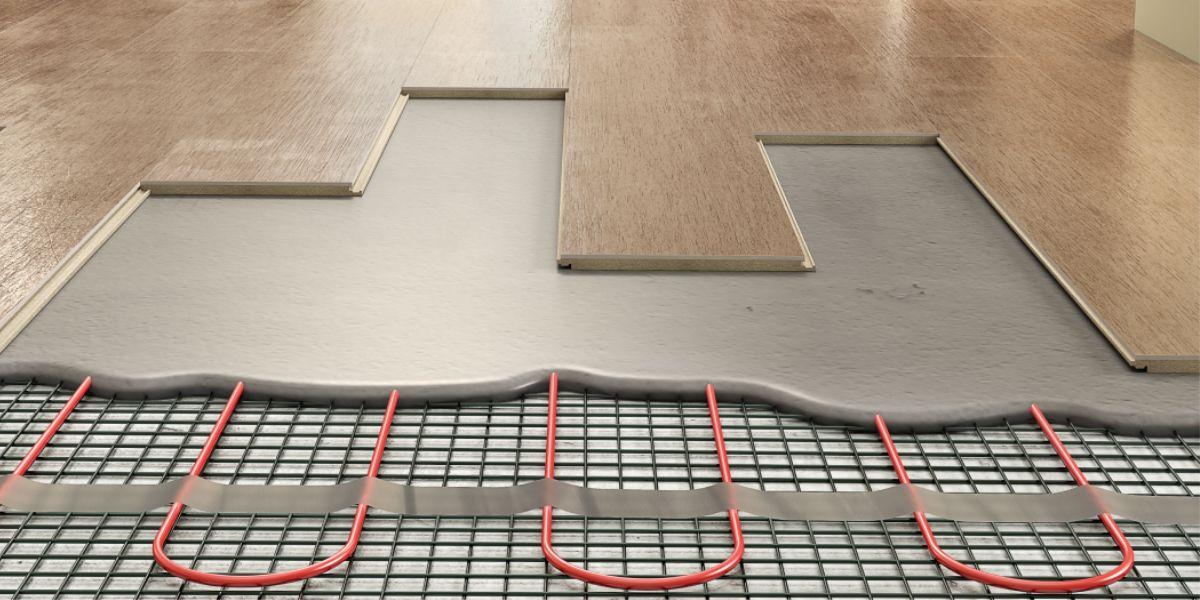
3. Installation of heating pipes or cables
In this step, the heating system itself begins to be installed. Depending on the type of underfloor heating you have chosen, this step will vary:
- For water-based underfloor heating systemsFlexible polyethylene or polybutylene pipes are laid along the floor. These pipes will be responsible for transporting hot water from the heat source (boiler,heat pumpor aerothermal system) throughout the entire surface. The pipesmust follow a specific design, generally in a spiral or serpentine shape, to ensure that the heat is distributed evenly throughout the room. Thedistancethe distance between the pipes is also crucial and must be adjusted according to the type of installation and the desired level of heat.
- For electric underfloor heating systems: Instead of pipes, heating cables are installed.heating electric cables. These cables work similarly to water pipes, but instead of transporting hot fluid, they generate heat directly when receiving electrical current. These electrical systems are ideal forsmaller areasor for homes where it is not possible to install water heating systems.
It is important to securely fasten the pipes or cables usingspecial clips or supports, to prevent them from moving during the installation of the final floor. Additionally, special attention should be paid to areas close to the walls, as it is advisableleave a space to allow for the expansion of the material.
4. Connection to the heating system or electrical network
Once the pipes or cables are installed, the next step is to connect them to the power source that will supply the system:
- For water underfloor heating, the pipes are connected to acollector that regulates the distribution of waterhot throughout the system. This collector, in turn, is connected to theboiler or to an aerothermal system, which generates hot water. The installation of the manifold is crucial, as it will allow for independent temperature control of each area of the house. Furthermore, in many cases, the manifold is placed in a cabinet or aaccessible placeto make adjustments or maintenance.
- For electric underfloor heating, the cables are connected to thethermostatand to the electrical network. This thermostat will be responsible for regulating the temperature of the system and ensuring that heat is distributed efficiently. At this point, it is important to ensure that the entire system is properly wired and that there are no faulty connections.
5. Heating system tests
Before covering the system with the final floor, it is essential to conduct pressure tests (for water systems) or operational tests (for electrical systems) toto ensure that there are no leaks, connection failures, or technical issues. This step is critical, as once the system is covered by the final floor, any corrections will be much more expensive and complicated.
For water-based underfloor heating systems, apressure testto verify that the pipes are installed correctly and there are no leaks. The system is pressurized with water and it is checked that it maintains the pressure for a certain period of time.
In the case of electric underfloor heating, the resistance of the cables and the correct functioning of the thermostat are checked.the resistance of the cables and the proper functioning of the thermostat.
6. Pouring the mortar or screed layer
Once all the tests have been completed and the system is functioning correctly, the next step is to cover the pipes or cables with a layer of mortar or screed.cover the pipes or cables with a layer of mortar or screed. This layer, about4 to 6 centimetersof thickness, serves to protect the heating system and also to act as a means of heat distribution.
It is importantto ensure that the screed is poured evenlyand is allowed to dry completely before proceeding with the installation of the final covering. This drying process can take several days, depending on the type of mortar and environmental conditions.
7. Installation of the final floor covering
The final step in the process ofhow to install underfloor heatingis to place thefloor covering, which can beceramic, stone, laminate, or even wood.
However, it is essentialto choose materials that are compatiblewith underfloor heating systems. Materials that conduct heat well, such as ceramics and stone, are ideal, although other types of flooring can also be used, as long as they are designed to be compatible with this type of heating.
When installing the covering, it is important to keep in mind thatthe pipes or cables underneath should not be damaged. In addition, the installation must allow heat to flow freely across the entire surface, avoiding cold spots.
8. Start-up of the system
Once the floor is installed and the mortar has completely dried, you can start the system. It is advisablegradually increase the temperature, especially during the first few days, to allow all the materials to adjust to the heat without causing cracks or stresses in the floor.
Advantages of underfloor heating
This type of heating has numerous advantages:
✅ Energy efficiencyBy heating from the ground up and distributing heat evenly, less energy is required to maintain a constant temperature.
✅ ComfortHeat is distributed evenly, without cold drafts and without sudden temperature fluctuations.
✅ Aesthetics and spaceYou don't need visible radiators, which improves the available space in the rooms.
✅ Compatibility with renewable energiesThe systems ofunderfloor heating with aerothermal energyare highly efficient, harnessing the energy from the outside air to generate heat sustainably.
Conclusion
Understandhow to install underfloor heatingis essential to make the most of the advantages that this heating system offers. Whether you choose a water-based or electric system, this technology is an efficient, aesthetic, and highly comfortable solution for any installation or project.
In addition, it is an option that integrates perfectly with sustainable systems such as aerothermal energy, which can translate into asignificant energy savings.
If you are looking to improve your home with a modern and efficient heating system, theradiant heating installationit may be the ideal option for you.
Underfloor heating installation: Frequently asked questions
How to install a water-based underfloor heating system?
Theinstallation of water underfloor heating follows a similar process to the one described above, but with the particularity that it connects to a heat source that generates hot water, such as a boiler or a heat pump system. This type of heating is ideal for large areas and is more cost-effective in the long run than electric underfloor heating.
Why install underfloor heating with aerothermal energy?
If you still don't knowwhat aerothermal energy is, this is a technology that uses the energy from the outside air to heat the water that circulates through the pipes of the underfloor heating system.
Therefore,install an underfloor heating system with aerothermal energyis a very efficient option, especially in cold climates, as it significantly reduces energy consumption and environmental impact. Furthermore, this option can lead to substantial savings in operating costs.
How much does it cost to install underfloor heating?
The cost of theinstallation of underfloor heatingvaries depending on the type of system and the area to be covered. The average price can range from 50 to 100 euros per square meter, depending on whether it is an electric or water system, and whether it includes technologies such as aerothermal energy.
Returns within 30 days
Shop with peace of mind. If something goes wrong, we'll take care of it.
After-sales service
Any questions? Our support team will be happy to help you.
Pay how and when you want
Card, bank transfer, PayPal... Installment? We have them all.
GroupSumi is your online distributor for construction, electrical material and climate control.





All rights reserved © 2026 GroupSumi